
The Week in Review: BS 5837 Surveys in Monaghan and Belfast
From a Tree Constraints Plan to a Tree Protection Plan in Antrim, the first site inspections in County Monaghan, and two late finishes to get a BS 5837 drawing and report to a client near Belfast.
Written by John McNamara, arboricultural consultant, McNamara Tree Consultancy. Holds Professional Tree Inspection (PTI) certification and is an Associate Member of the Arboricultural Association. View John's qualifications and experience
By Friday evening, we were still at our desks getting a BS 5837 drawing and report ready for Belfast City Council. It brought back memories of university, when there was always one more thing to sort out before you could hand the coursework in. Earlier in the week, we'd been working on a tree protection plan in Antrim and had driven down to Clones and Ballybay for the first site inspections. Here's what happened between Monday morning and those two late finishes.
From tree constraints to tree protection in Antrim
We started the week with a BS 5837 project in Antrim that had reached a point I always like to see. We'd already produced a Tree Constraints Plan (TCP), and the client had used it to shape their design proposals. They'd taken account of the space the trees needed and drawn up a layout that was sympathetic to them. That meant we could move on to the next stage and prepare the Tree Protection Plan (TPP).
The two drawings answer different questions. At the design stage, a Tree Constraints Plan shows where the existing trees, their canopies and their root protection areas (RPAs) affect what can be built. Give that drawing to a design team early enough and they can use it when they're deciding where things should go. That's exactly what the client in Antrim did.
Once there's a layout to work with, the questions get more practical. How do you keep the space around a retained tree clear once people and machinery are on site? Where do protective measures need to go? The Tree Protection Plan gives the construction team a drawing they can work from. On Monday, we took the work the client had already done to accommodate the trees in the design and carried it through to the construction stage.
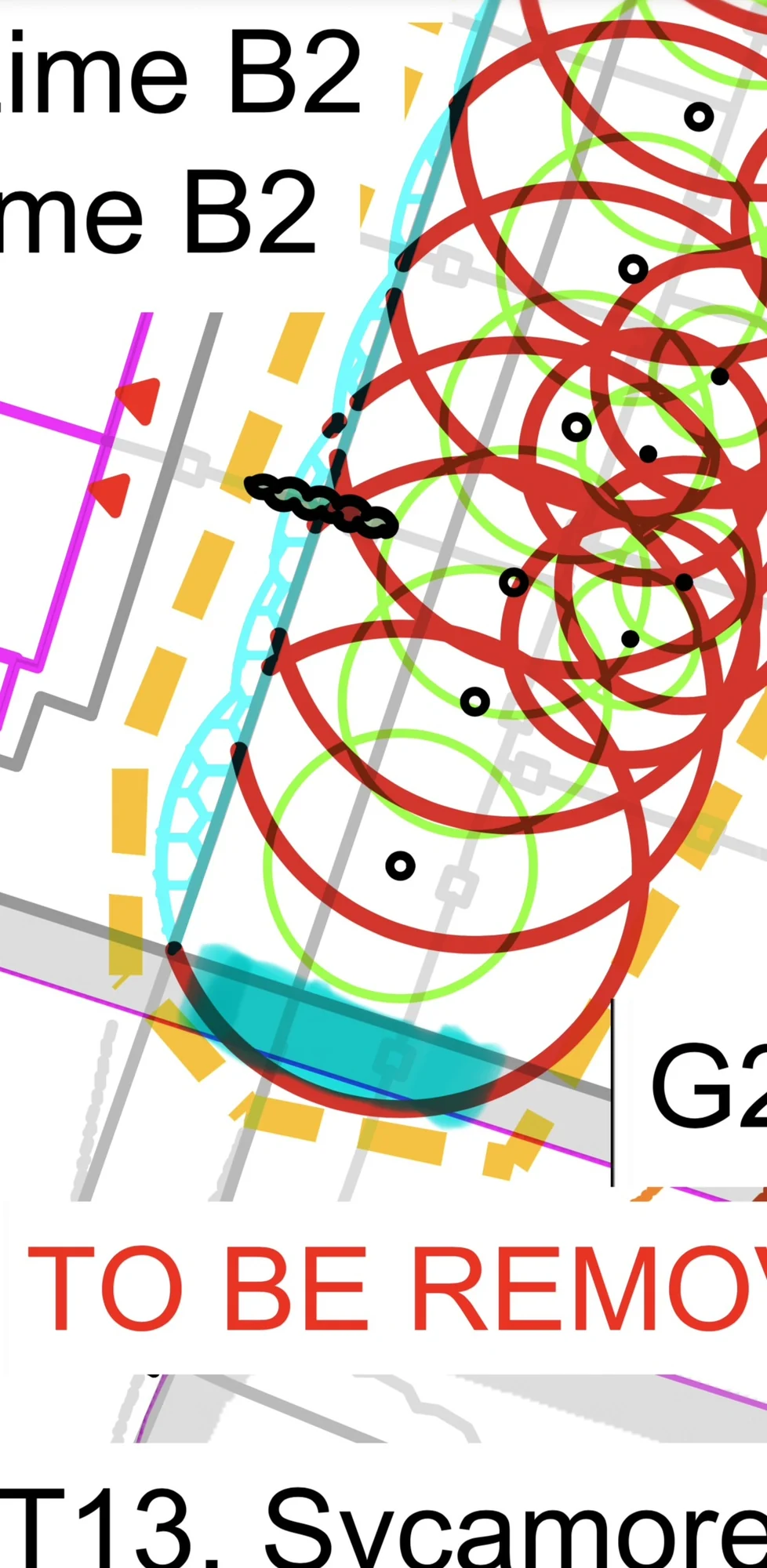
Detail from a BS 5837 tree plan
BS 5837 tree surveys in Clones and Ballybay
On Tuesday and Wednesday we swapped the drawing for the site work, heading down to Clones and Ballybay in County Monaghan. We were there on behalf of Monaghan County Council to carry out the initial tree inspections for its BS 5837 tree surveys. Where Monday's job had a design we could work from, the Monaghan work was at the stage where we were gathering the information a design team could use later.
A lot of what makes a tree survey useful comes down to what you can see when you're standing beside the tree. From a drawing you can see where a tree has been plotted. On site, you can see how it actually grows in the space around it. The photograph below shows a good example of the sort of detail you can pick up on foot. The tree forks low down into several stems and grows right beside a wall. Its position on a map tells you where to find it. The view from the ground tells you a lot more about how it fits into the site.
That's what the initial inspections are for. You record what's there and use that information to show where trees might influence the proposals as they develop. It's the groundwork for the kind of design decisions the client in Antrim had already made by the time we sat down with their plans on Monday.
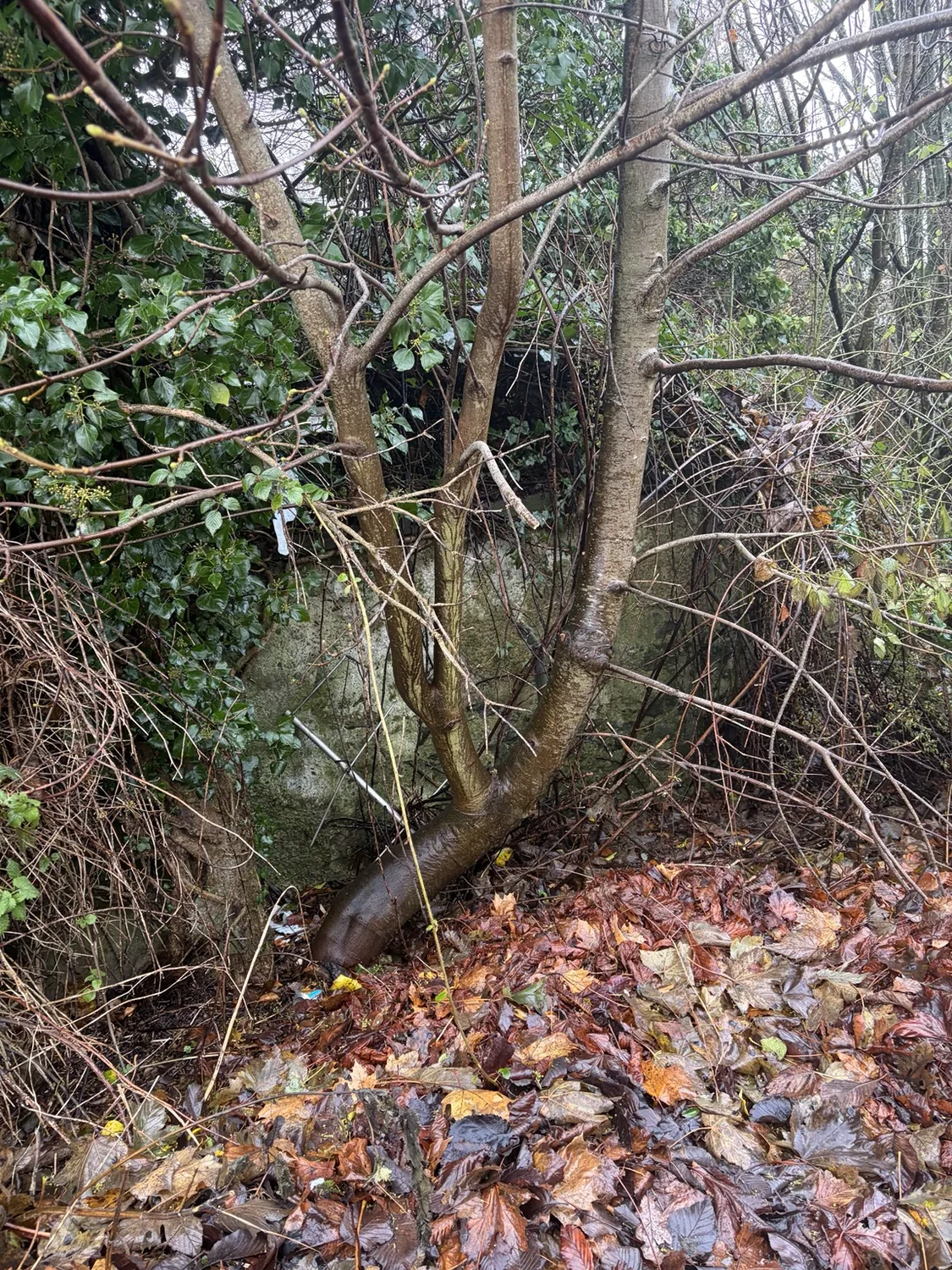
A multi-stemmed tree growing beside a wall
A change of plan near Belfast
We'd expected to spend Thursday and Friday out on site again. Then the client asked if we could bring forward the drawing and report for a BS 5837 project just outside Belfast. We'd already carried out the tree survey on behalf of Belfast City Council, so we moved the site visits and put those two days into getting the documents ready.
There's a fair bit of desk work between walking a site and handing over a usable drawing and report. The drawing has to show the tree information clearly in relation to the site, and the report has to explain what that information means for the people taking the project forward. The two need to make sense together, especially when the person reading them wasn't there for the survey.
It meant working well into the evening on both days. Anyone who's pulled an all-nighter at university to get coursework in will know the feeling of looking up from the screen and realising how late it's got. It was worth moving the diary around to help the client meet their deadline. We do that regularly at McNamara Tree Consultancy. Some weeks the most useful thing we can do for a client is get out on site. This time, it was getting the drawing and report into their hands when they needed them.
Back to VALID Tree Risk-Benefit Assessments
From 23 November, we're back on the road for a week of VALID Tree Risk-Benefit Assessments. We'll be in Belfast, Lisburn, Coleraine, Enniskillen, Omagh and Dungannon, working for a range of clients. After a week spent looking at how trees fit into development proposals, we'll be looking at how they're managed in the places people already use.
McNamara Tree Consultancy provides independent arboricultural consultancy services throughout Northern Ireland and the Republic of Ireland, including BS 5837:2012 tree surveys, Tree Constraints Plans, Tree Protection Plans and tree risk assessments.