
What Is an Arboricultural Survey and How Can It Improve Your Business?
Arboricultural survey is a term that covers several very different reports. Here is what each one does, and why the right one at the right time saves businesses real money.
Written by John McNamara, arboricultural consultant, McNamara Tree Consultancy. Holds Professional Tree Inspection (PTI) certification and is an Associate Member of the Arboricultural Association. View John's qualifications and experience
An arboricultural survey is a professional assessment of trees carried out by a qualified arboriculturist: someone trained in the science of how trees grow, fail and respond to what happens around them. The term covers several different reports with different purposes, which is why the first job of any good tree consultant is working out which one you actually need.
For businesses and organisations, the right arboricultural survey at the right moment is rarely a cost. Done well, it prevents planning delays, avoids unnecessary tree works and turns an unmanaged liability into a documented, defensible asset.
The main types of arboricultural survey
Most instructions fall into one of four categories.
- BS 5837 tree surveys and Arboricultural Impact Assessments: required for planning applications where trees and development interact. They map, measure and categorise every relevant tree, then assess the proposal against them. The standard behind them is covered in BS 5837:2012 explained.
- Tree risk assessments: for landowners meeting their Duty of Care. Trees are assessed, risk is rated and the owner receives a proportionate management plan.
- Mortgage and property reports: commissioned during purchases when a lender or surveyor raises questions about trees near a building.
- Condition and management surveys: a health check for valued trees, from a single veteran oak to an estate collection, with recommendations for their long-term care.
How businesses gain from surveying trees properly
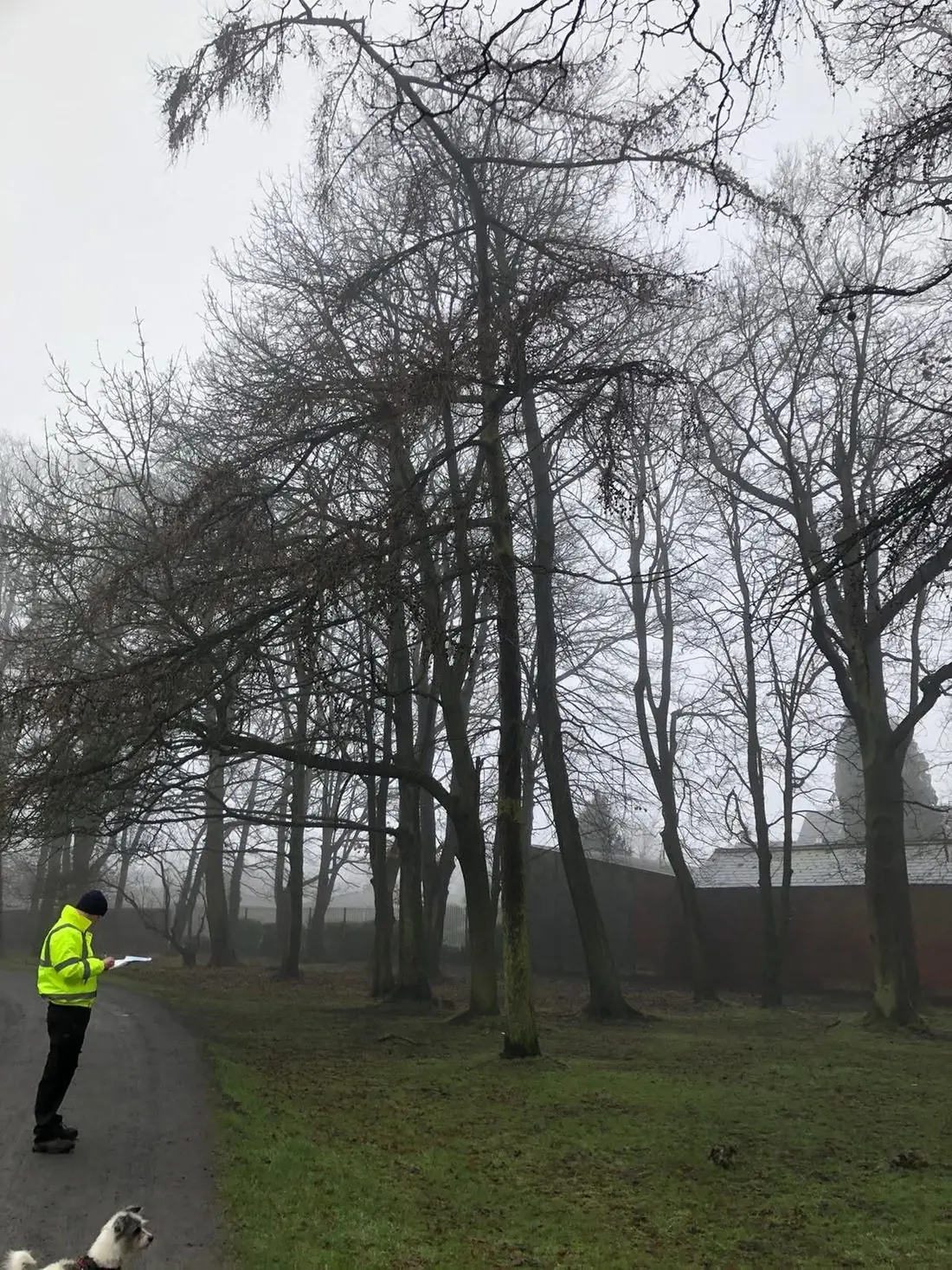
For developers and architects, the gain is programme certainty. A site surveyed before layout design means tree constraints shape the scheme once, instead of a planning officer reshaping it later. Applications supported by a proper Arboricultural Impact Assessment and Tree Protection Plan pass planning faster and attract fewer conditions.
For estates, schools, councils and any organisation with land, the gain is defensibility and budget control. A documented tree risk assessment programme demonstrates your Duty of Care is being met, satisfies insurers, and, because risk is rated rather than guessed, stops money being spent felling or pruning trees that never needed it.
For property professionals, the gain is speed. Purchases stall when tree questions sit unanswered; a prompt, lender-compliant report keeps transactions moving.
There is also a quieter, longer-term benefit that applies to every organisation: institutional memory. A good survey leaves you with a documented baseline, every significant tree identified, assessed and dated, so future decisions are made based on data, rather than the whims of a tree surgeon...
What happens during an arboricultural survey
Whatever the survey type, the shape of the work is similar. It starts with a short desk exercise: understanding why the survey is needed, reviewing any plans, previous reports or lender correspondence, and confirming the site boundary. That is what lets the site visit be efficient.
On site, each relevant tree is identified, measured and assessed. For planning work that means stem diameters, heights, crown spreads and quality categories recorded to the BS 5837 standard; for risk work it means an evaluation of three key components - Tree Health, Target Area and the Likelihood of Failure.
The report follows within an agreed timescale, written for its audience: a planning officer, an underwriter, an insurer or simply the owner. Every recommendation is specific, justified and proportionate, so you can act on it, or instruct a contractor to, without needing a degree in Arboriculture.
What to look for in an arboricultural surveyor
Qualifications matter: look for recognised arboricultural training and professional membership, and ask to see a sample report. Independence matters just as much.
If the person assessing your trees also profits from carrying out tree works, every recommendation carries a quiet conflict of interest.
McNamara Tree Consultancy carries out no tree works at all, so our advice is always directed at what is best for the tree and the client, nothing else.
If your business is weighing up a site, a portfolio or a single awkward tree, get in touch and we will tell you plainly which survey fits, and which you can skip.