
The Week in Review: Meripilus, Roots and Risk
Why a fungus at the base of a beech does not automatically mean removal, why we avoid the word hazard, and what happens when trees are planted too close together.
Written by John McNamara, arboricultural consultant, McNamara Tree Consultancy. A VALID Accredited Validator who also holds Professional Tree Inspection (PTI) certification and is an Associate Member of the Arboricultural Association. View John's qualifications and experience
Last week was incredibly busy at McNamara Tree Consultancy, and this week had a very similar feel to it.
Monday: a 179-year-old copper beech in North Belfast
On Monday we travelled to North Belfast to inspect a 179-year-old copper beech which, unfortunately, exhibited a plethora of Meripilus giganteus fronds.
Instinctively many arboriculturists and arborists observe these fruiting bodies at the base of a tree and recommend immediate removal. As research improves and understanding increases, attitudes are beginning to change, albeit at a fairly slow pace.
In this case however, the extent of the colonisation could not be argued with. Historic root damage appeared to have been the inciting incident that kickstarted this widespread colonisation.
Our job in this instance isn't to advise whether the tree will fail or not. That will happen in time. Rather, it is our job to work out where the tree will fail and whether that represents an Acceptable level of risk or not. In one direction is an old listed building, and in the other is nothing more than a Very Low occupancy lawn. Failure in one direction comes with little risk, whereas failure in the other comes with a lot more risk. At present we are still analysing the direction of failure, but if the evidence points toward the house as the possible target, the tree will unfortunately have to go.
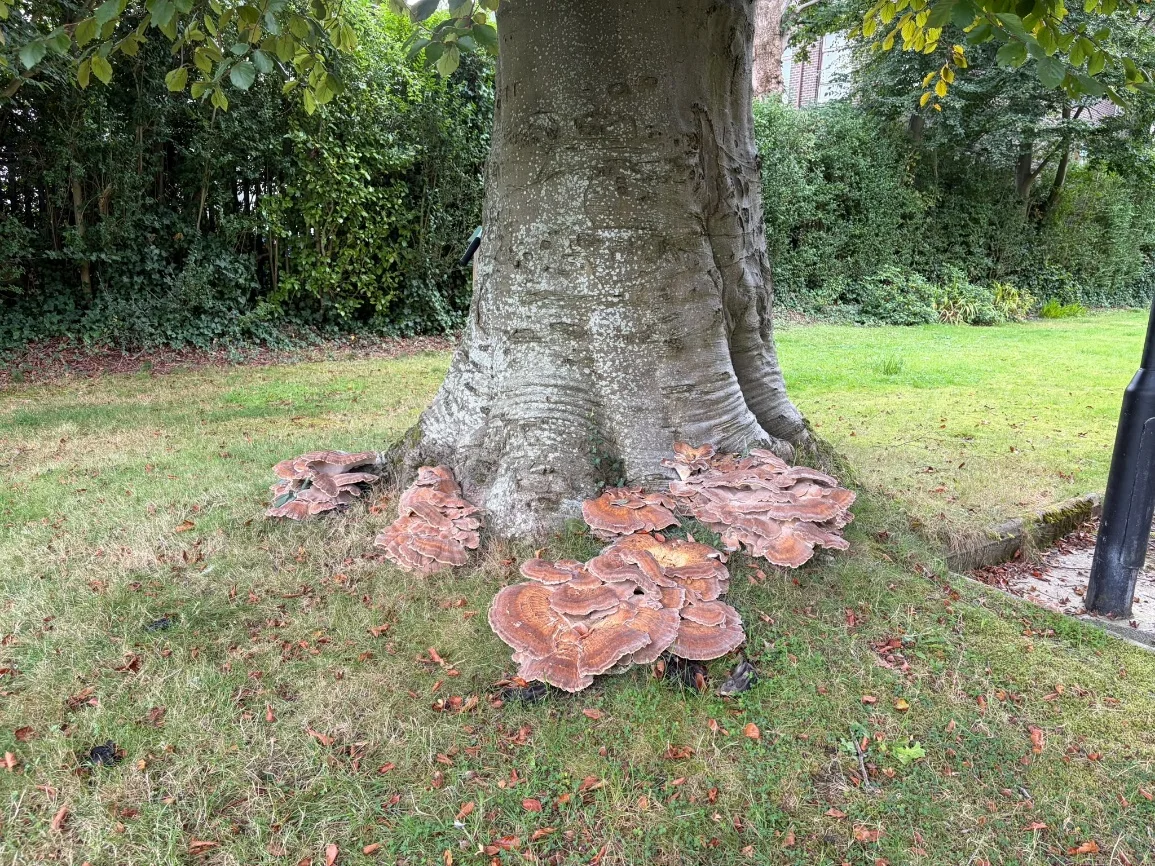
The outlook isn't great for this mature Beech.
Tuesday: roots on a shared boundary in Derry/Londonderry
On Tuesday we made the long trip up to Derry/Londonderry to carry out a risk assessment on a tree that was growing on a shared boundary. Our client's neighbours had raised concerns regarding the risk of above surface level roots that were potentially causing a trip hazard for their children.
Hazard is a word that we don't particularly like here at McNamara Tree Consultancy, because it's unquantifiable. The Oxford English Dictionary defines a "hazard" as, "something that can be dangerous or cause damage".
In plain English, that means that everything can be considered a hazard. A swinging knife, a blade of grass and even a big pink ball of cotton candy could be considered as a hazard in the right circumstances. But could doesn't mean anything in terms of risk, so we avoid it at all costs. Our job is about quantifying the risk accurately and making practical recommendations based on that.
Our observations at this site were that the roots, which were barely observable above the level of the lawn, may well have represented a "hazard", but the level of risk associated with that hazard was more than Acceptable. In fact, a cursory glance around the garden revealed several other features less acceptable in terms of risk that we would readily accept: a raised step with no handrails, open access to the road and an unsecured fence.
Final Verdict: Our tree in Derry/Londonderry was just fine.
Wednesday: a VALID assessment at Comber Leisure Centre
Wednesday saw us return to Comber to carry out our VALID Tree Risk-Benefit Assessment at Comber Leisure Centre on behalf of Ards and North Down Borough Council. The site was a classic example of what can go wrong when humans insert themselves too heavily into the lives of other living organisms.
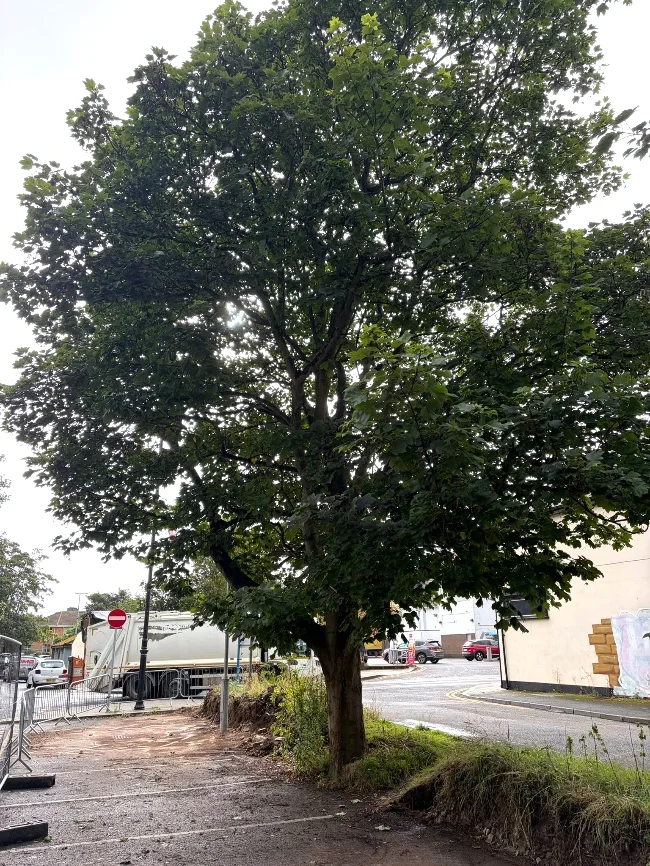
Roots optional? It's a tough life for this urban Sycamore.
Sycamore (Acer pseudoplatanus) was the dominant species on site, and could be found in small grassy clusters around and inside the car park to the Leisure Centre. Unfortunately, these fast-growing trees had all been planted far too close to one another. The result of which, was an early-mature tree stock of fast-growing phototropism-on-steroids trees that had several structural defects.
In their bid to outcompete one another and become arboreal Icaruses, many of the trees had given up proper structural planning and had grown acute-angled forks with included bark.
These features are weak points on trees and are often the point of failure in high winds. Where possible we recommended the installation of dynamic bracing to help strengthen the trees' weak unions. However, in some cases, where tree structure took on too much of a Dr Frankenstein form, we were forced to recommend removal.
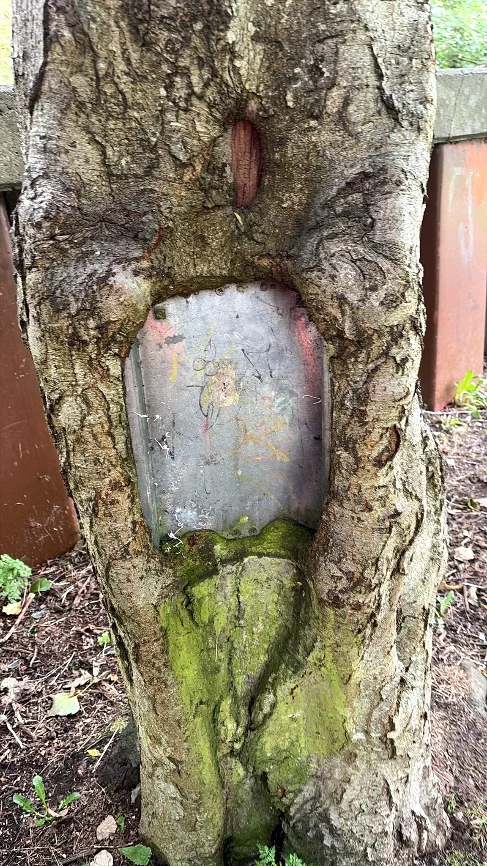
Ancient arboriculture in action. Remnants of a metal plate inserted into a tree to "block-off" a cavity.
Thursday: a planning agents forum at Lough Neagh
Thursday brought something different altogether, a trip to Lough Neagh Discovery Centre for a Planning Agents Forum with Armagh, Banbridge and Craigavon Borough Council. Whilst not much of the morning was focused on trees, it was good to get a broader understanding of the issues facing local councils.
Our only feedback to Armagh, Banbridge and Craigavon Borough Council would be that they ditch their name altogether in favour of a shorter, snappier name!
Friday: back to the reports
Friday. The day that Robert Smith becomes overwhelmed with feelings of love, and the day that we at McNamara Tree Consultancy find ourselves in the office catching up with a mountain of admin. Tree surveying isn't all about field work, there's report writing to think about too, and with all we've done these past two weeks there is a LOT of report writing to catch up on.
Speaking of which, we'd best get back to it!