
The Week in Review: Lichens, Exotic Trees and a Fence on the Menu
A suspected fungus that turned out to be lichen, a collection of exotic trees at Mount Stewart, and several trees in Lisburn that had started to eat a metal fence.
Written by John McNamara, arboricultural consultant, McNamara Tree Consultancy. A VALID Accredited Validator who also holds Professional Tree Inspection (PTI) certification and is an Associate Member of the Arboricultural Association. View John's qualifications and experience
September continued in much the same fashion at McNamara Tree Consultancy: plenty of travelling, plenty of trees, and the occasional reminder that appearances can be deceiving.
This week took us from a suspected fungal infection in Dunmurry to the exotic tree collection at Mount Stewart, with residential surveys in Lisburn and six sites for Ballymena Block Management thrown in for good measure.
Dunmurry: a case of mistaken identity
Our visit to Dunmurry followed a call about a tree with suspected Kretzschmaria deusta, which had been spotted by a tree surgeon.
Suspected is the important word here. Identifying something unusual on a tree is a good reason to have a closer look, but it isn't, on its own, a reason to reach for the chainsaw.
In this case, the suspected fungus turned out to be lichens. The tree was in great shape, and no action was required.
A fairly uneventful conclusion, perhaps, but a very good one for both the tree and its owner. The concern had been raised, the tree had been inspected, and unnecessary work had been avoided. Sometimes the most useful advice we can give is also the least dramatic.
Final verdict: our tree in Dunmurry was just fine.
Mount Stewart: something a little different
We also travelled to Mount Stewart, the National Trust site, to carry out a Tree Risk Assessment on a small plot of land containing a wide range of exotic species.
One of the pleasures of this job is the variety. Trees have an admirable ability to make two apparently similar jobs feel very different, and a collection of exotic species certainly provides a change of scenery.
The principles of the assessment, however, remain the same. We consider the tree's condition, the likelihood of failure and the use of the area that could be affected. An unusual tree still needs a proportionate assessment, just as a familiar one does.
The aim is to give the client practical advice that allows the trees to be managed reasonably, whilst recognising the value of the collection itself.
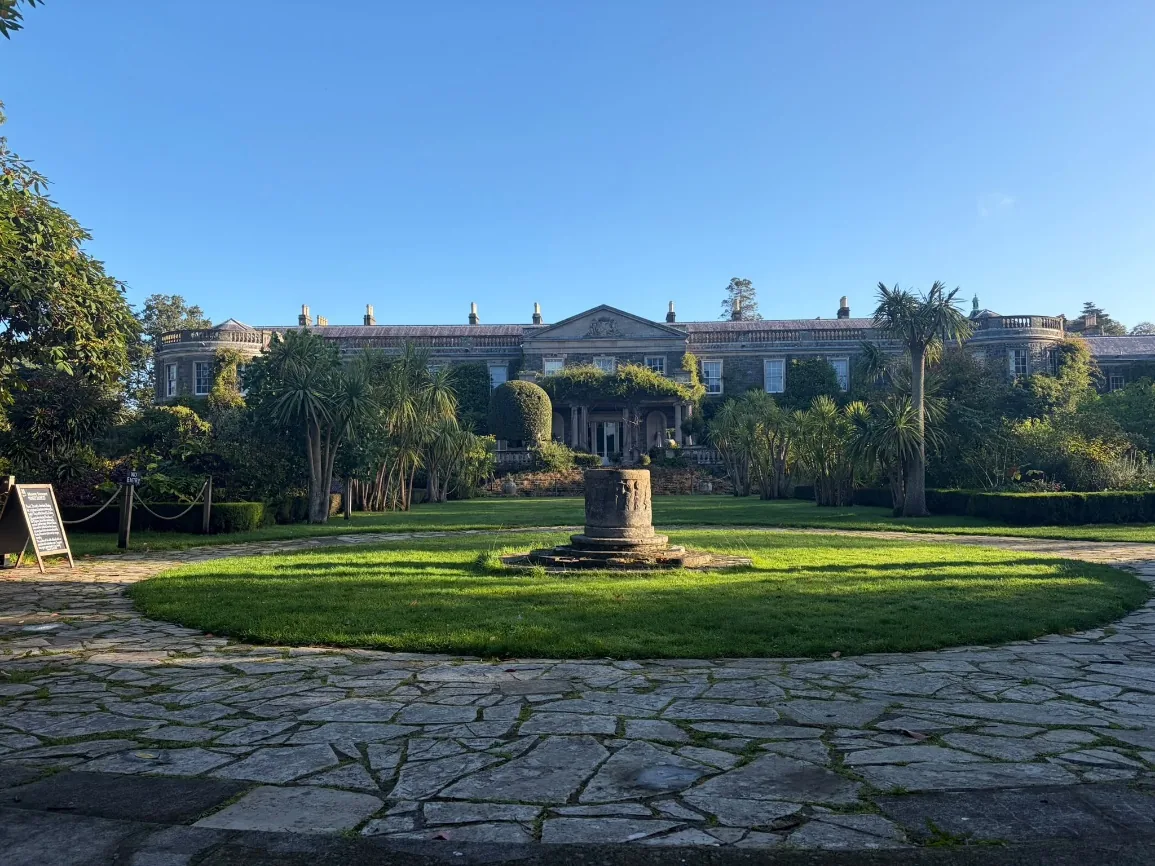
Lisburn: trees with a taste for metal
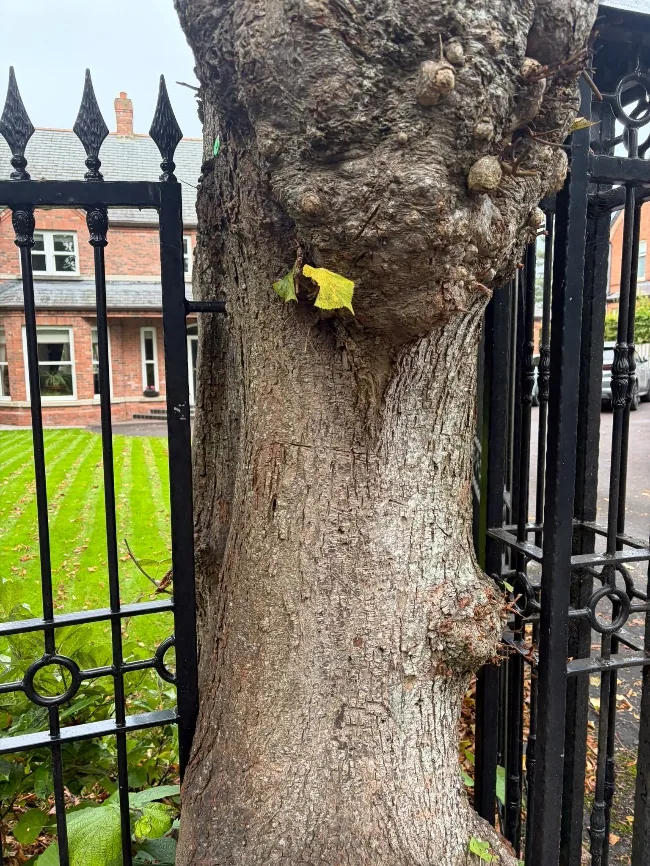
A residential property in Lisburn provided seven trees for a VALID Tree Risk-Benefit Assessment, including the curious case of several specimens that had started to eat a metal fence.
Eat is perhaps a little unfair. The fence had found itself in the path of the trees' growth, and the trees had continued growing around it. Nobody appears to have told them where the boundary was.
It is an eye-catching feature, but eye-catching and high risk are two different things. As with any unusual feature, the job is to assess what it means for the tree in its actual setting, rather than make a recommendation based on how strange it looks.
There is no separate risk category for a tree that appears to be digesting the garden fence.
Six residential sites for Ballymena Block Management
The week also included six residential sites for Ballymena Block Management, where the emphasis was on common sense risk assessment and avoiding unnecessary tree works.
Residential settings can generate understandable concerns about trees. They are close to homes, parking spaces and the routes people use every day. Those concerns deserve a proper assessment, but the presence of a tree beside a house does not tell us, by itself, what level of risk it poses.
That is what the survey is there to establish. Using a consistent approach allows us to quantify risk and make recommendations that reflect the evidence, giving the client a sensible basis for managing their trees.
Unnecessary work costs money and can remove the very benefits that made the trees worth keeping in the first place. Equally, where work is justified, the client needs clear advice about what is required and why.
Six sites, an exotic collection and a fence slowly disappearing into a tree. Another varied week in arboriculture, and another reminder that a closer look can be considerably more useful than a quick conclusion.