
Veteran Trees: Recognising Their Value and Planning Their Care
A hollow trunk or an old broken limb can prompt an understandable question: what should happen to this tree?
Written by John McNamara, arboricultural consultant, McNamara Tree Consultancy. Holds Professional Tree Inspection (PTI) certification and is an Associate Member of the Arboricultural Association. View John's qualifications and experience
A hollow trunk or an old broken limb can prompt an understandable question: what should happen to this tree? For owners and managers, the starting point is understanding what is there, what it means and what needs closer assessment.
This introduction to veteran trees brings together the Woodland Trust's conservation guidance and photographs supplied by John McNamara. The photographs illustrate visible features. They do not establish the trees' age, veteran status or structural condition on their own.
What is a veteran tree?
A veteran tree has developed valuable decaying-wood features, such as hollowing trunks or branches. It need not be exceptionally old. An ancient tree is in a late life stage relative to its species: all ancient trees are veterans, but not all veterans are ancient.
Looking closely: cavities and old wounds
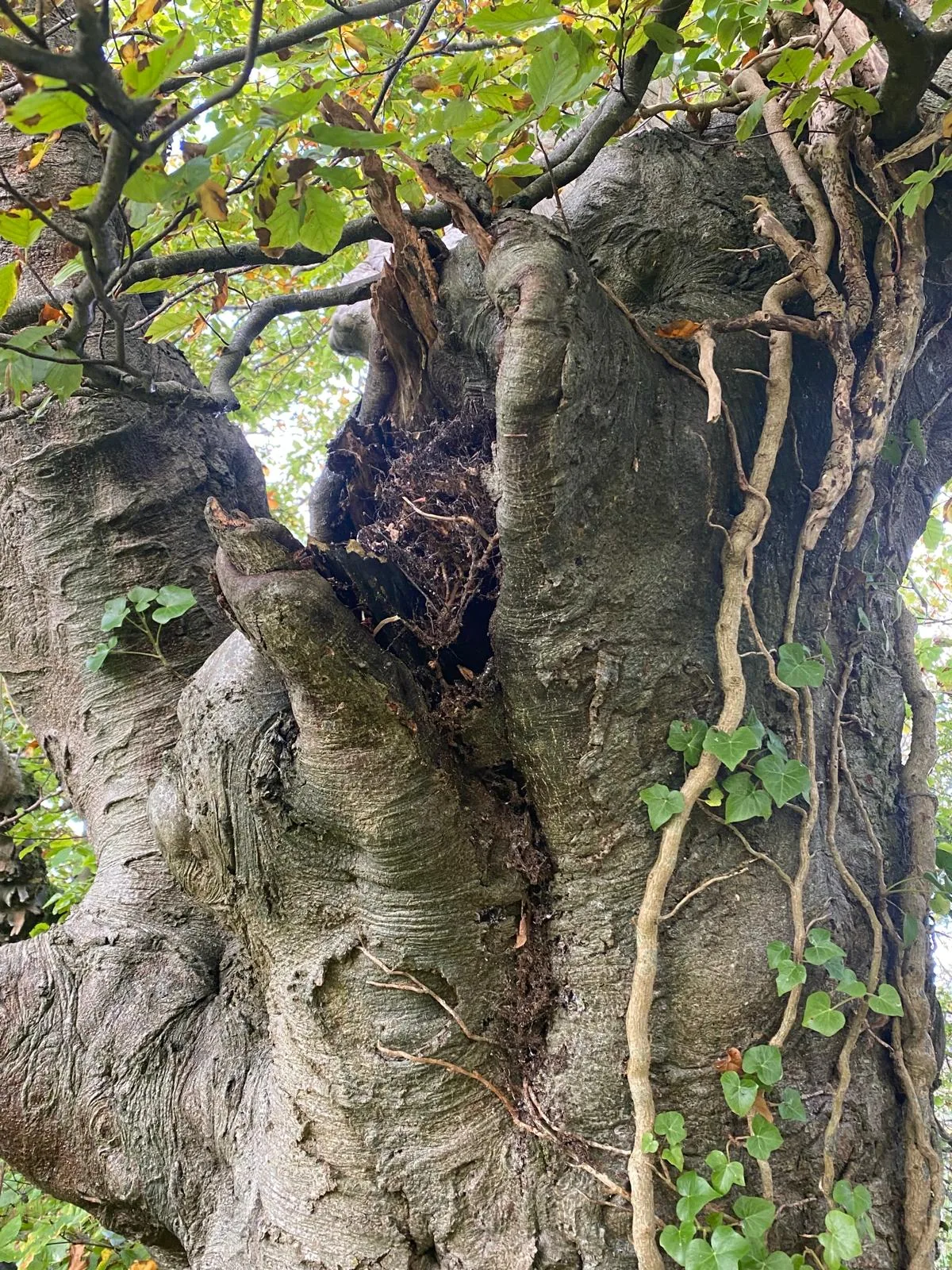
An elongated opening surrounded by rounded margins of living growth. The photograph records the visible surface, rather than the extent of any internal cavity.
In this photograph, the contrast between the dark opening and the surrounding smooth bark makes the feature particularly clear. Woody material is visible within the opening, while growth around its edges gives it an uneven outline.
Useful questions for an inspection include: where does the opening begin and end? What part of the trunk or branch does it affect? Can its extent be established from the ground, and what remains obscured? A close photograph helps record the feature, but a wider view is needed to show its position within the tree.
Why decaying wood matters
Decaying wood provides specialist habitat. Cavities, different stages of decay and standing or fallen wood contribute to that value. Conservation assessment therefore considers what a tree supports, alongside threats to its continued life.
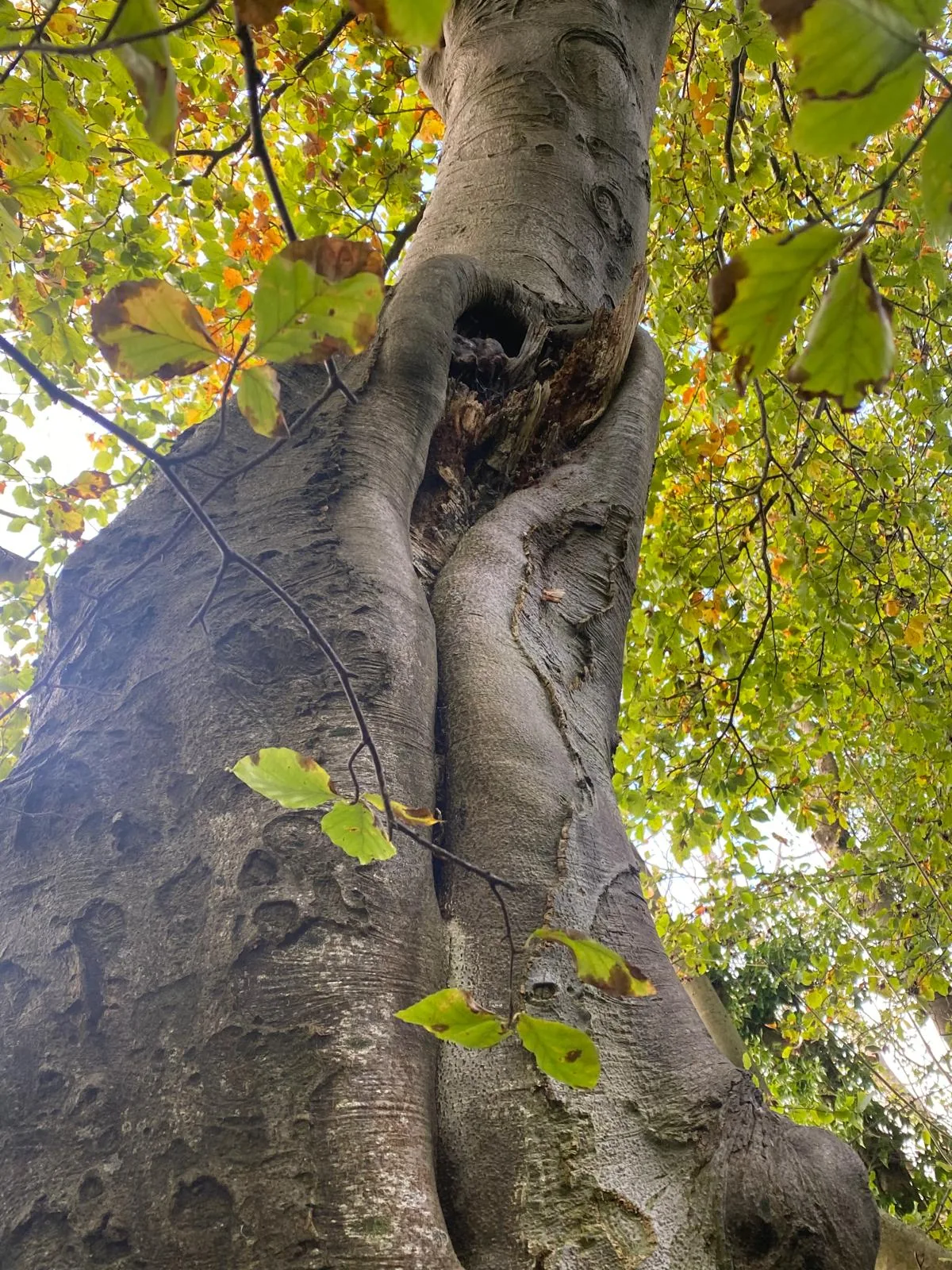
A cavity and exposed wood on a stem, with rounded growth along the margins. Wildlife use cannot be confirmed from this image.
The second view shows a more compact dark opening above a longer exposed section. These details provide a useful photographic record for comparison at a later visit. They also show why a description such as "a hole in the tree" leaves important questions unanswered.
How should veteran trees be assessed?
The Woodland Trust recommends three stages: record, assess and secure. Record the species, location, dimensions, form and features. Assess roots and soil, trunk and crown, and surroundings. Then agree proportionate conservation measures and monitoring.
Possible measures include protecting rooting areas, reducing damaging activities, retaining suitable deadwood and planning successor trees. Intervention is individual, and monitoring without immediate work may be appropriate.
Photographs are a starting point for advice
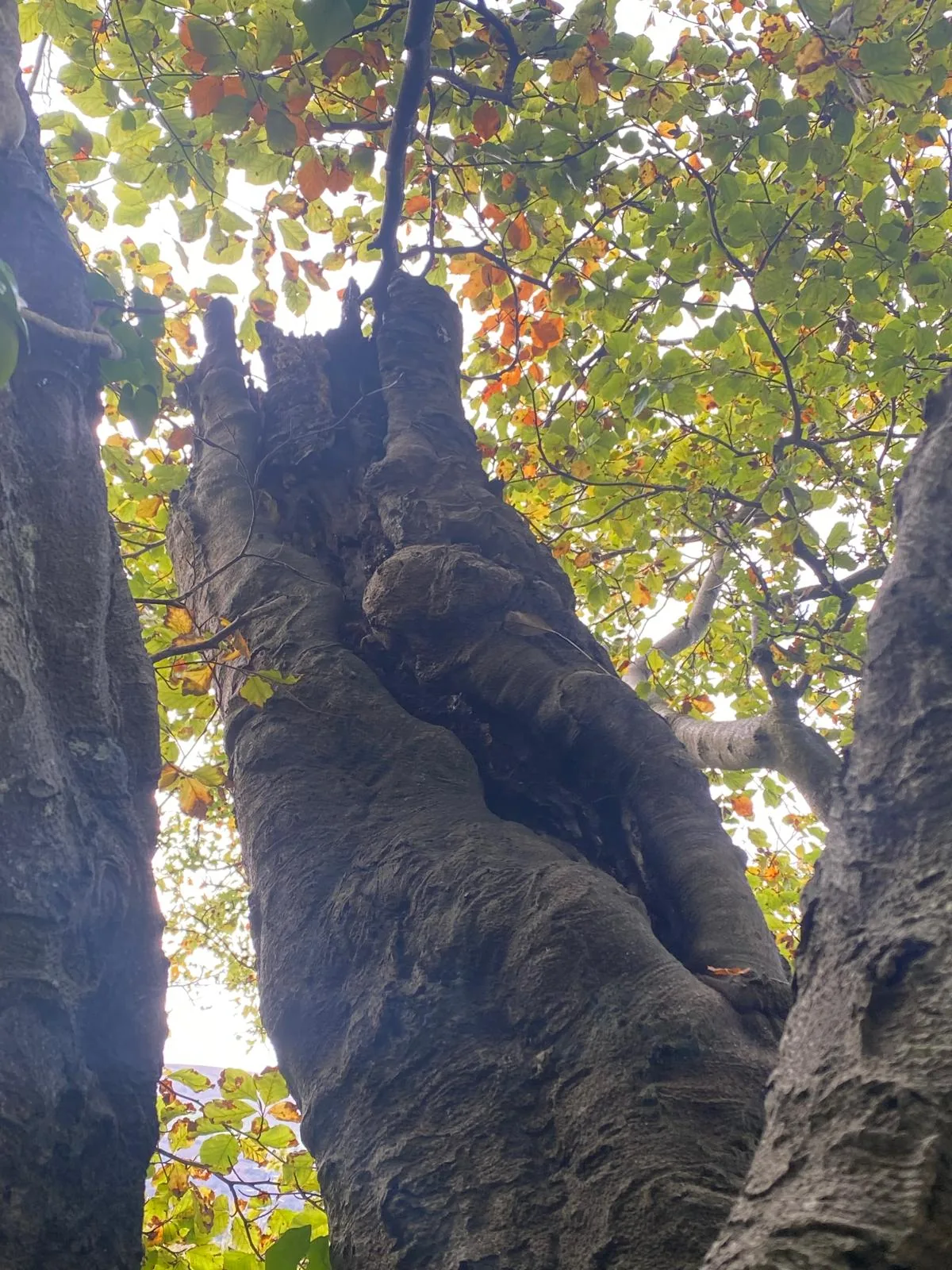
A broken stem end and exposed wood viewed from below. The surrounding stems and foliage give context to the recorded feature.
The third photograph places the broken section among adjacent stems. For an owner requesting advice, this combination of detail and context is useful. An additional photograph showing the whole tree, its base and nearby paths or buildings would help explain the enquiry.
Does a cavity mean a tree must be removed?
A photograph does not provide enough information to prescribe removal or pruning. In an enquiry, explain what has prompted concern, whether anything has changed recently and how the surrounding area is used. That helps establish the appropriate inspection brief.
The Woodland Trust guide addresses conservation, rather than tree safety inspection. Where safety concerns also exist, a separate tree risk assessment is needed. Our guide to tree inspections explains what that involves.
Veteran tree advice in Northern Ireland & Ireland
At McNamara Tree Consultancy, we welcome enquiries about established trees in gardens, estates, parks and woodland. Send photographs, the site location and a short explanation of your concern or proposed work. We can discuss the appropriate survey and identify where additional specialist input is needed. Our case study of the Dark Hedges survey shows how decaying wood can be retained where the assessment supports it.
For advice about a potential veteran tree, contact John McNamara at john@mctree.co.uk or call 07376 226 294.
Further reading: Gilmartin, E. (2022), Ancient and veteran trees: An assessment guide, Woodland Trust. This article is an independent introduction. The photographs are supplied by John McNamara.