Assessing the Dark Hedges: Tree Retention and Visitor Safety
A look back at a collaborative 2023 survey of the Dark Hedges, and how condition, visitor safety and habitat retention were weighed tree by tree.
Written by John McNamara, arboricultural consultant, McNamara Tree Consultancy. A VALID Accredited Validator who also holds Professional Tree Inspection (PTI) certification and is an Associate Member of the Arboricultural Association. View John's qualifications and experience
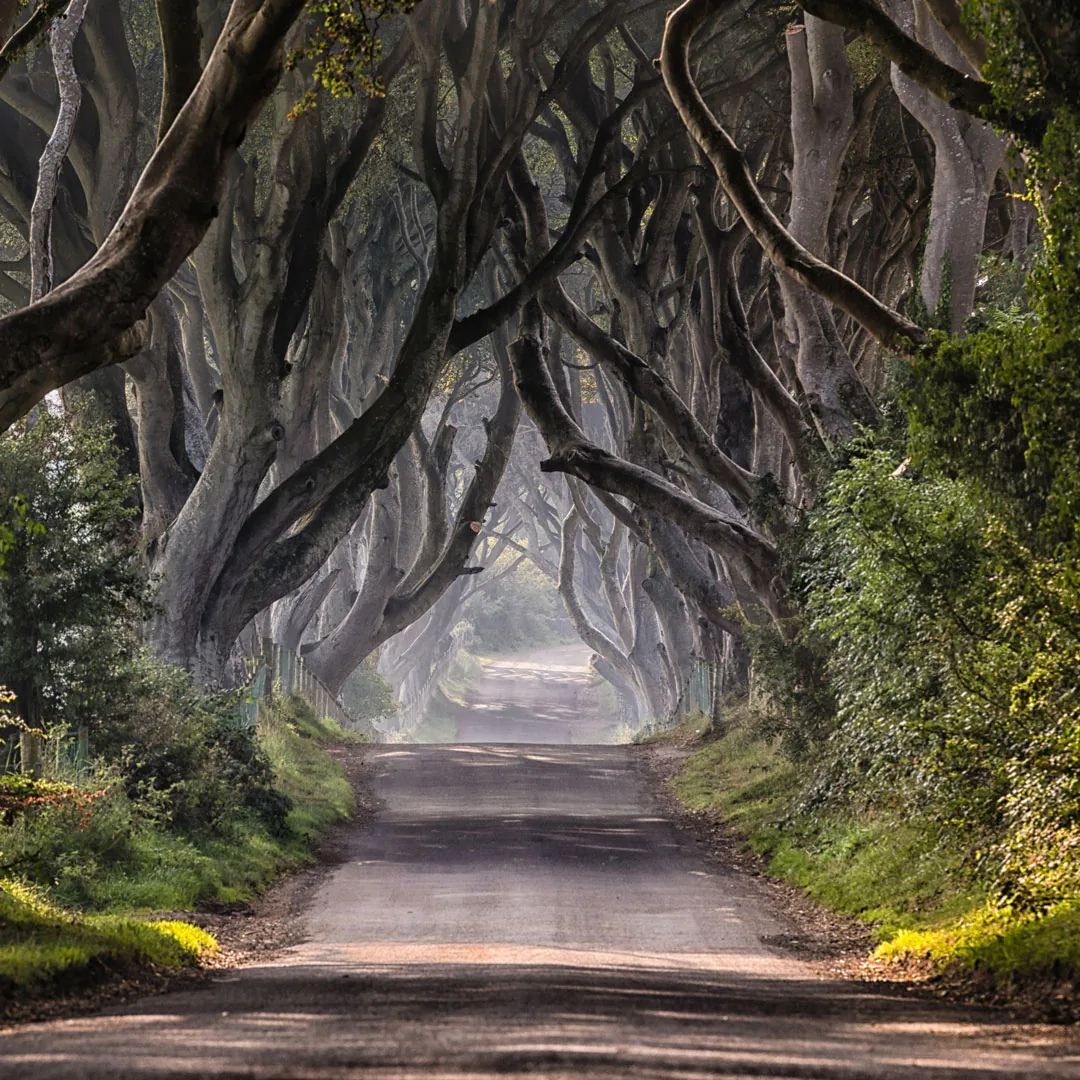
The Dark Hedges
The trees at the Dark Hedges are the defining feature of the landscape. Assessing their condition requires careful judgement about individual specimens, the people using the avenue and the opportunities to retain trees and habitat.
In June 2023, John McNamara undertook a detailed tree survey at the Dark Hedges with a colleague, as part of a commission for Causeway Coast and Glens Heritage Trust. The work assessed the trees along Bregagh Road and provided recommendations for their future management.
This article looks back at that collaborative project and the findings recorded at the time.
Assessing trees in their surroundings
The survey used Quantified Tree Risk Assessment, or QTRA, to consider tree condition alongside the potential consequences of failure and the presence of people or property.
Trees were plotted using GIS software and recorded in detailed assessment schedules. The inspection considered visible defects and signs of decline, with acoustic investigation using a nylon mallet forming part of the assessment.
The relationship between each tree and its surroundings was central to the recommendations. A branch above the road required different consideration from woody material extending over an adjacent field. The survey recorded these distinctions so management decisions could respond to the actual location of each finding.
A largely positive picture, with specific concerns
The report concluded that the majority of inspected trees were in good condition, with only five recommended for removal. It also identified trees requiring other forms of management, including deadwood removal, reduction and continued review.
That distinction is important when communicating the results of a survey. A recommendation for work does not always mean removing a tree. Some concerns can be addressed through a targeted intervention, while other specimens can remain subject to monitoring.
The detailed schedules set out the findings and management options for individual trees, giving the client a basis for prioritising action.
Retaining deadwood where the assessment supported it
The report recommended removing large-diameter deadwood where it presented a concern, while retaining smaller deadwood or material over lower-use areas where the assessed risk was negligible.
This approach recognised the biodiversity value of deadwood within the site. Its presence was considered in context, with recommendations shaped by its size, location and relationship with people using the avenue.
For selected trees, the schedules also recommended reduction to a short standing trunk and retention as a wildlife specimen. These options helped distinguish the need to address a particular risk from the decision to remove all woody material. Our introduction to veteran trees explains why decaying wood matters.
Looking closely at one tree with decay
One example was tree T75, where fruiting bodies of the decay fungus Kretzschmaria deusta were observed at ground level.
The report considered that finding alongside the tree's direction of growth and mechanical loading towards the neighbouring field. Removal was not recommended. Instead, the proposed treatment involved fracture pruning, using a coronet cut, of a secondary stem extending above the road.
This was a recommendation for that individual tree, based on the observations recorded in 2023. It illustrates the level of detail involved in assessing how a defect, a tree's structure and its surroundings relate to one another.
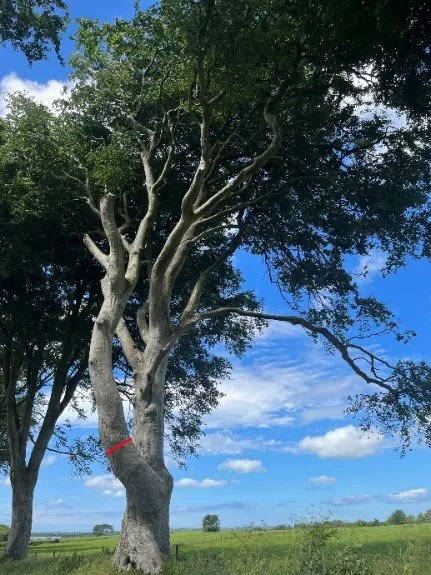
Diagram indicating location of recommended coronet cut
Providing a basis for future management
The report recommended annual reinspection of retained trees, unless individual schedules specified otherwise, together with further checks following extreme wind events. Recommendations and priorities were recorded so the client could plan work and ongoing review.
The Dark Hedges project forms part of John's experience of assessing established trees in a sensitive visitor setting. The work combined detailed inspection, mapped records and management recommendations aimed at addressing identified risks while retaining trees and habitat where appropriate.