
Managing Ash Dieback at Portna Riverside Walk, Kilrea
A tree risk assessment and management strategy for Waterways Ireland along 1.3 kilometres of riverside walk, with ash dieback affecting many of the trees.
Written by John McNamara, arboricultural consultant, McNamara Tree Consultancy. A VALID Accredited Validator who also holds Professional Tree Inspection (PTI) certification and is an Associate Member of the Arboricultural Association. View John's qualifications and experience
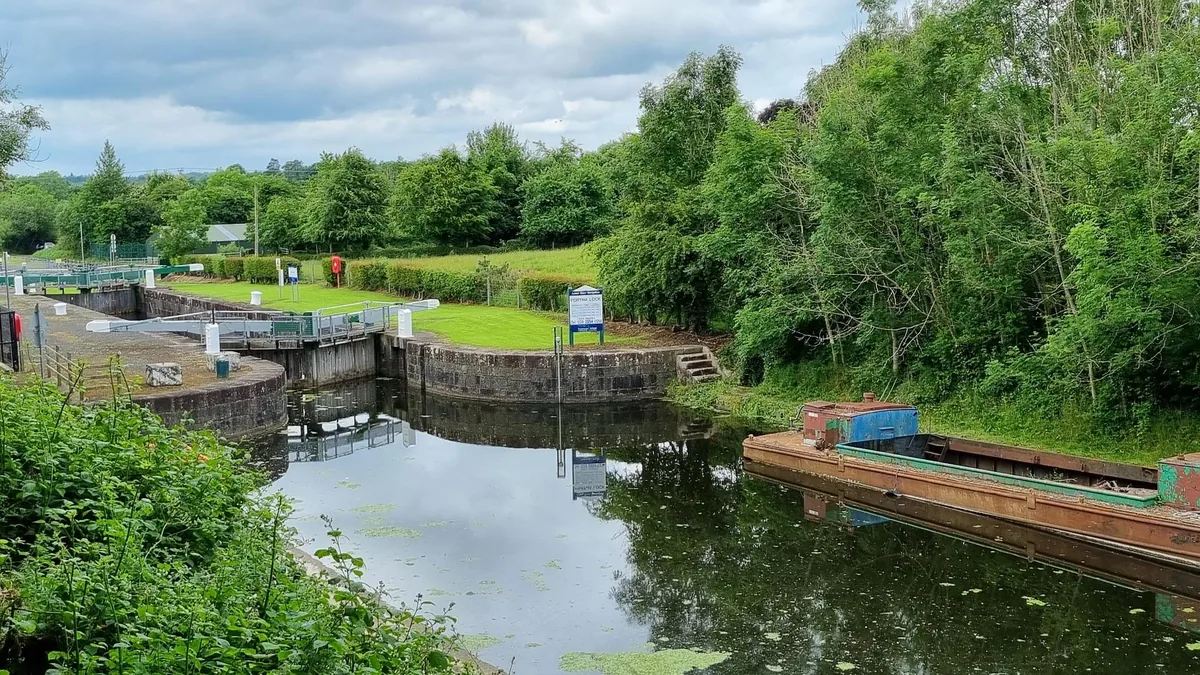
Portna Riverside Walk, Kilrea
A wooded riverside walk needs an approach to tree management that recognises both its visitors and the trees that make it worth visiting. At Portna Riverside Walk in Kilrea, our work for Waterways Ireland brought those considerations together in a tree risk assessment and bespoke management strategy.
The November 2025 assessment covered approximately 1.3 kilometres between Portna Road and Hutchinson's Quay. With ash dieback affecting many of the trees, the brief required clear advice on immediate management needs and a practical framework for looking after the site over time.
Understanding the trees and the people using the walk
The site consisted predominantly of semi-mature ash, alongside larger and older trees of ash and other species. Many of the affected ash were relatively small, with stem diameters below 150mm.
Our assessment used the VALID Tree Risk-Benefit approach. We considered the condition of the trees alongside the likelihood of people being present where a tree or branch could fall. Most of the route was recorded as having Low occupancy, with car parks considered separately. The walk was also identified as a location where use was affected by poor weather.
These details shaped the recommendations. The smaller affected ash described in the report were assessed as presenting a Tolerable level of risk in their site context. We recommended managing dead and dying trees as resources permitted, with larger specimens prioritised in accordance with their individual risk ratings and the site strategy.
Retaining habitat within the management recommendations
The report set out specific recommendations for individual trees and groups, including deadwood removal, further review and reductions to short standing trunks, known as monoliths.
Four trees were recommended for reduction to two-metre monoliths. Another was recommended for felling into the woodland and leaving in its entirety as a wildlife specimen. These recommendations provided options for retaining woody material within the site while addressing the particular risks identified by the survey.
Other trees required monitoring rather than immediate intervention. The recommendations included twelve-month reviews for selected trees and groups, allowing future decisions to respond to changes in condition.
Managing where visitors spend time
Tree work formed only part of the proposed management approach. We also recommended considering the location of benches and parking areas, moving them away from tree canopies or groups where appropriate.
A bench creates a place where people stop. A parking area introduces a different pattern of use from a passing pedestrian route. Reviewing these features gave the client additional ways to manage exposure to tree risk.
The report also recommended lockable gates to support closure during storms and other extreme weather events. This was a site-specific proposal for managing access when conditions warranted it.
A strategy for ongoing management
Alongside the survey, we provided a bespoke Tree Risk-Benefit Management Strategy. This set out a role for regular passive observation by staff, active assessment following storms, and referral for a detailed assessment where concerns required specialist judgement.
The report proposed a general reinspection in 2030, with earlier reviews for specified trees and groups and additional assessment in response to events or changes. That distinction matters: a scheduled survey sits within an ongoing management process. Our guide to tree inspections and how often a tree needs one explains how those cycles are set.
The resulting report gave Waterways Ireland a basis for prioritising work, retaining habitat features and making practical decisions about access and visitor facilities. It illustrates how a tree survey can support the management of an entire route as well as its individual trees.