
Tree Risk Management Across Seven Fermanagh and Omagh Council Sites
Seven council sites, from play parks to a riverside path, assessed with one consistent method and recommendations shaped by each location.
Written by John McNamara, arboricultural consultant, McNamara Tree Consultancy. A VALID Accredited Validator who also holds Professional Tree Inspection (PTI) certification and is an Associate Member of the Arboricultural Association. View John's qualifications and experience
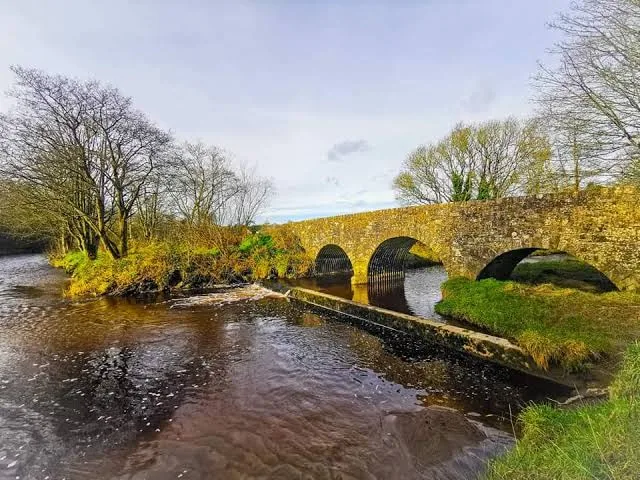
Lovers Retreat, Omagh
Managing trees across several public sites means making decisions in very different settings. A roadside boundary, a play area and a quieter riverside path each have their own patterns of use and management needs.
In November 2025, we carried out tree risk assessments for Fermanagh and Omagh District Council across seven sites. The commission brought together a consistent assessment approach with recommendations tailored to the trees and conditions at each location.
Seven sites, different management considerations
The survey covered Round O Park and Killyvilly Play Area in Enniskillen, McCauley Park and Lovers Retreat in Omagh, Garrison Play Park (also known as Rusheen Park), Mill Race Path in Ballinamallard, and Brookeborough Park.
We used the VALID Tree Risk-Benefit approach, actively assessing trees within the brief and progressing to detailed assessment where necessary. This allowed the survey to consider tree condition alongside the use of the surrounding space.
At Mill Race Path, for example, no visitors were observed during the inspection. However, the assessment allowed for likely increased use at weekends and during the summer, adopting a Low occupancy level rather than Very Low. A quiet survey visit was considered alongside the expected use of the route.
Turning assessments into work priorities
Across the seven sites, 59 trees were progressed to Detailed Assessment. These were a subset of the trees assessed within the commission, rather than the total number surveyed.
Of those 59 trees, 21 were rated Acceptable, four Tolerable, 18 Not Acceptable and 16 Not Tolerable. The detailed schedules recorded the reasoning and associated management recommendations, providing a basis for a programme of works.
Those figures describe the trees selected for closer assessment at the time. They should not be read as proportions of the council's wider tree population or as a statement of present-day conditions.
Recommendations shaped by each location
At Round O Park, recommendations included Cobra bracing for selected trees, together with regular passive observation by council personnel. At Killyvilly Play Area, only one tree required remedial work.
McCauley Park presented a different set of findings, including hanging branches and failed trees within small woodland areas. The report recommended using the accompanying Obvious Tree Risk Features guidance to help identify and address these concerns.
At Lovers Retreat, the presence of large beech trees along the riverside walk informed the recommendation for regular passive observation. At Garrison Play Park, exposure to strong westerly winds and the influence of those conditions on tree growth led to particular emphasis on observing ground conditions.
Identifying where further inspection was needed
Some findings required better access or improved visibility before a fuller judgement could be made.
At Mill Race Path, one tree on a steep incline showed possible signs of a decay fungus. Its base could not be safely accessed during the survey, so a roped reinspection was recommended. The report recorded that limitation and specified the next assessment step.
At Brookeborough Park, attention focused on trees along road boundaries, particularly the southern edge. Heavy ivy cover restricted inspection of several trees there. We recommended severing ivy at their bases and reinspecting later. A separate tree with observed decay-fungus fruiting bodies was recommended for removal.
These recommendations gave the council a way to resolve uncertainty where the initial inspection could not provide all the necessary information.
Supporting management between surveys
The report recommended closure of the surveyed sites during named storms and extreme wind events, together with checks for signs of damage afterwards. It also set out a role for council personnel in recognising and reporting obvious tree risk features between specialist inspections, as described in our guide to tree inspections.
The completed assessment provided detailed findings, site-specific recommendations and a basis for scheduling work across seven locations. It demonstrates how a consistent survey method can support practical decisions across a varied public tree population.