
Tree Preservation Orders in Northern Ireland: How to Check and What They Mean
A Tree Preservation Order does not stop you managing a tree. It means the council has to agree first. Here is how to check, what needs consent and what the law says.
Written by John McNamara, arboricultural consultant, McNamara Tree Consultancy. Holds Professional Tree Inspection (PTI) certification and is an Associate Member of the Arboricultural Association. View John's qualifications and experience
A Tree Preservation Order, or TPO, is how a council in Northern Ireland protects a tree it considers important to the area. Most people find out they have one at the worst possible moment, usually when the tree surgeon is already booked. It is far better to know beforehand, and finding out is not difficult.
What is a Tree Preservation Order?
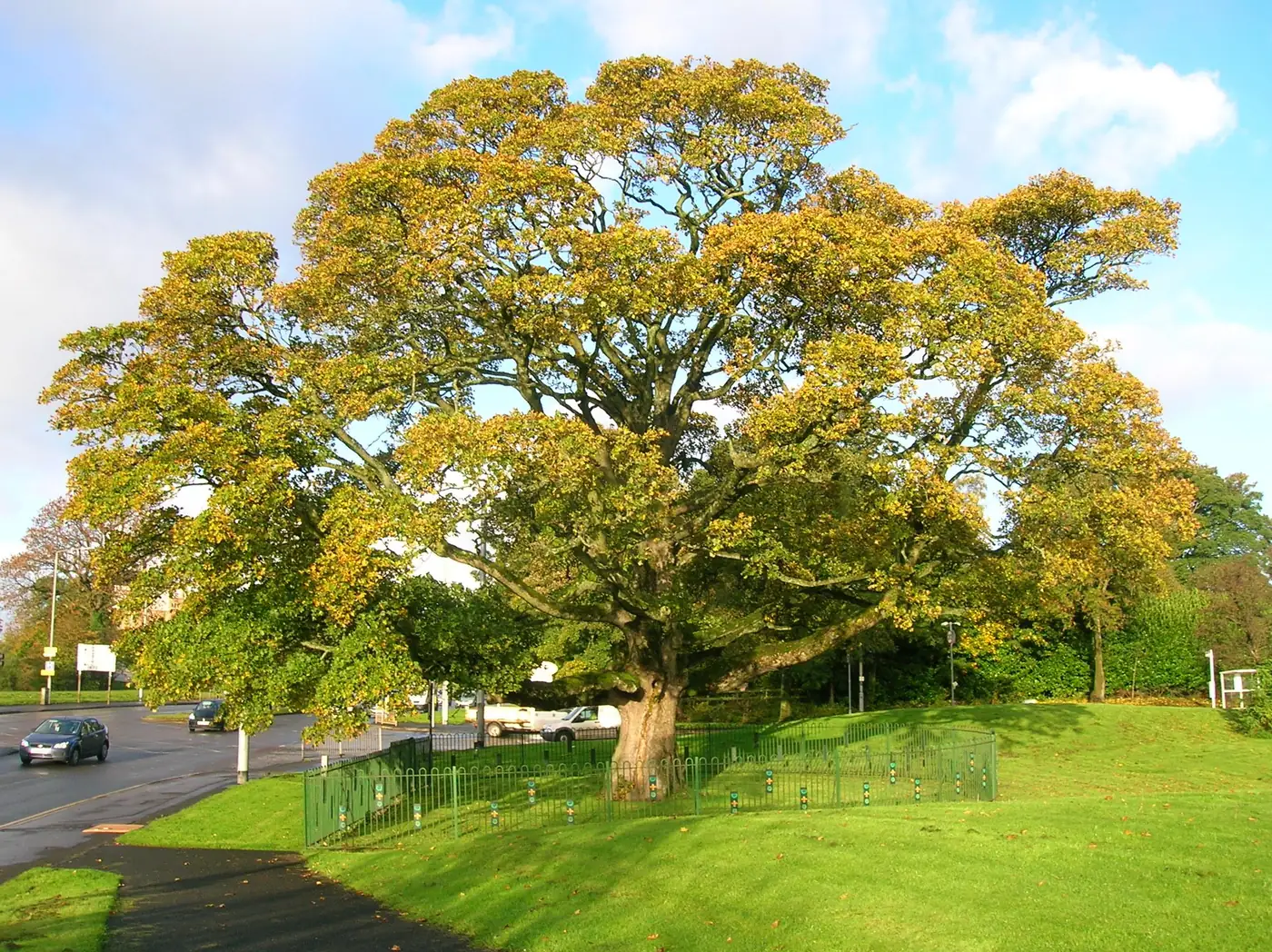
A TPO is an order made by your local council under the Planning Act (Northern Ireland) 2011. It can cover a single tree, a group of trees or a whole woodland, and it comes with a map showing exactly which trees are included. Councils have held this power since April 2015. Before that it sat with the Department of the Environment, and orders made in those years still stand.
The test the council applies is amenity, which means whether the public would feel the loss of the tree. Species does not come into it, and neither does size on its own. A modest tree in a prominent spot can be protected while a far bigger one in a back field is not.
Once an order is in place it is an offence to cut down, top, lop, uproot, wilfully damage or wilfully destroy the tree without the council's consent. That includes pruning. It also includes the roots, which is the part people forget when they dig for a driveway or an extension. Where building work is planned near a protected tree, a BS 5837 tree survey is how the roots are accounted for before anyone lifts a spade.
How do I find out if a tree has a TPO?
Start with your council. A number of councils in Northern Ireland publish an online map where you can enter an address and see any TPO or Conservation Area on or beside your property. At the time of writing, Belfast, Ards and North Down, Antrim and Newtownabbey, Mid and East Antrim, Causeway Coast and Glens, and Newry, Mourne and Down all offer one. Searching your council's name together with TPO map finds it quickly.
If your council has no map, email its planning department with the address and a photograph of the tree and ask the question directly. It costs nothing. Every order has to be kept available for the public to inspect, so the council can also show you the order itself and the map that goes with it.
A TPO is one of three protections, and it is worth asking about all three in the same email.
- A Tree Preservation Order.
- A Conservation Area.
- A condition on a planning permission requiring trees to be kept.
Do not assume a tree is unprotected because nobody mentioned it when you bought the house. Our article on whether you need planning permission to cut down a tree covers how the three fit together.
Trees in a Conservation Area
A tree in a Conservation Area is protected even where no TPO exists. Before any work is carried out the council must be given notice in writing, identifying the tree and the work proposed. The council then has six weeks to respond, and the work has to be completed within two years of the notice.
There is a size threshold. The rule does not apply to a tree whose stem is 75 millimetres or less in diameter, measured over the bark at 1.5 metres above ground level. In practice that excludes saplings and very little else.
Our advice is not to treat silence as permission. Submit a well documented application and wait for the council's answer in writing before any work starts.
What can be done without consent?
The Act exempts work on a tree that is dead or has become dangerous. That is not as simple as it sounds. If the council later disagrees, it is the owner who has to show that the tree was dead or dangerous at the time. Photographs taken beforehand and a written report from an independent arboriculturist are what settle that argument, and a tree condition survey provides both. Some councils ask to be told immediately and sent the evidence. Whatever your council's rule, tell it before the work is done wherever there is time.
Removing a protected tree on these grounds also carries a duty to plant a replacement of an appropriate size and species in the same place, unless the council agrees otherwise. The replacement is then covered by the original order.
What are the penalties?
They can be significant. Cutting down, uprooting or wilfully destroying a protected tree, or damaging it in a way likely to destroy it, carries a fine of up to £100,000 in the Magistrates' Court and an unlimited fine in the Crown Court. In setting the fine the court must take into account any financial benefit gained from the offence, such as a site made easier to develop. The same penalties apply to trees in a Conservation Area.
A reputable tree surgeon will ask whether a tree is protected before starting. If yours does not ask, check for yourself.
How do I get consent for work on a protected tree?
You apply to your council's planning department. The route depends on the council. Some take applications through the Planning Portal and others use their own form, so check your council's page first. Whichever route it is, the application has to identify the tree, describe the work and give the reasons for it.
The council has to be satisfied that the proposed work is arboriculturally justifiable and proportionate, and a Tree Officer will usually visit to check what the application says against the tree itself. You cannot simply ask to fell a protected tree because it drops its leaves in autumn. A recorded defect, or a pruning specification written to the recognised standard and supported by evidence, is a different matter.
Belfast City Council gives eight weeks as its usual timescale. Most councils do not publish one, and it can take longer. If consent is refused, or granted with conditions you disagree with, there is a right of appeal to the Planning Appeals Commission. The time allowed for an appeal is set out in the decision letter.
Here at McNamara Tree Consultancy, this is the work we do through our tree works applications service. We assess the tree, write the report, prepare the drawing and deal with the Tree Officer throughout.
Can I ask for a tree to be protected?
Yes. Anyone can ask their council to consider a tree for a TPO, whether they own it or not. Where the council believes a tree is under immediate threat it can make a provisional order that takes effect straight away. A provisional order lasts for up to six months. During that time the owner and the neighbours have at least 28 days to object or comment, and the council then decides whether to confirm it.
How long does a TPO last?
Once confirmed, an order has no expiry date. It stays with the land when a property is sold and remains in force until the council revokes it. A tree protected thirty years ago is still protected today.
The law may be about to change
A Tree Protection Bill is before the Northern Ireland Assembly. It was introduced in June 2026, passed its second stage in September, and now goes to the Assembly's Committee for Infrastructure for detailed scrutiny. As drafted it would add protection for ancient trees and long-established woodland, make it an offence to cause or permit a breach of an order, and require protected trees to be shown on a public map. It is not law yet and it may be amended before it becomes law. Everything above describes the position as it stands today.
And in the Republic of Ireland?
The Republic has its own system. Tree Preservation Orders there are made by the local authority under separate planning legislation, and tree felling is also controlled through felling licences. That is a subject for another article.
If you are not sure whether your tree is protected, or you know that it is and work is needed, send us the address and a photograph and we will tell you where you stand. McNamara Tree Consultancy prepares tree works applications across Northern Ireland & Ireland. And if the worry behind all of this is what happens should the tree come down, our article on who is liable when a tree falls explains where an owner actually stands.