
10 Types of Trees That Fight Climate Change
All trees lock up carbon, but some do far more for the climate than others. Here are ten types of trees that earn their place, and how to choose the right one for your ground.
Written by John McNamara, arboricultural consultant, McNamara Tree Consultancy. Holds Professional Tree Inspection (PTI) certification and is an Associate Member of the Arboricultural Association. View John's qualifications and experience
When people ask which types of trees do the most for the climate, they usually expect one magic species. The honest answer is more useful: the best tree for the climate is a tree that suits its site, establishes quickly and lives a long, healthy life. A struggling tree locks up very little carbon; a thriving one works for a century or more.
That said, some types of trees consistently earn their keep in the growing conditions of Northern Ireland and Ireland. The ten below combine strong growth, long lives and real value for wildlife, and between them there is an option for almost any site, from a field boundary to a small garden.
Large trees for land with room to grow
Where space allows, big long-lived broadleaves are the heavy lifters of carbon storage.
- Oak: the benchmark. Slow to start but immensely long-lived, storing carbon for centuries and supporting more insect life than any other native tree.
- Beech: casts deep shade and builds a huge canopy, with dense timber that holds carbon well.
- Small-leaved lime: fast-establishing, honey-scented flowers for pollinators, and tolerant of pruning where space is tighter.
- Scots pine: our only native large conifer, evergreen, so it keeps working through the winter, and happy on poorer, sandier ground.
Fast growers and wet-ground specialists
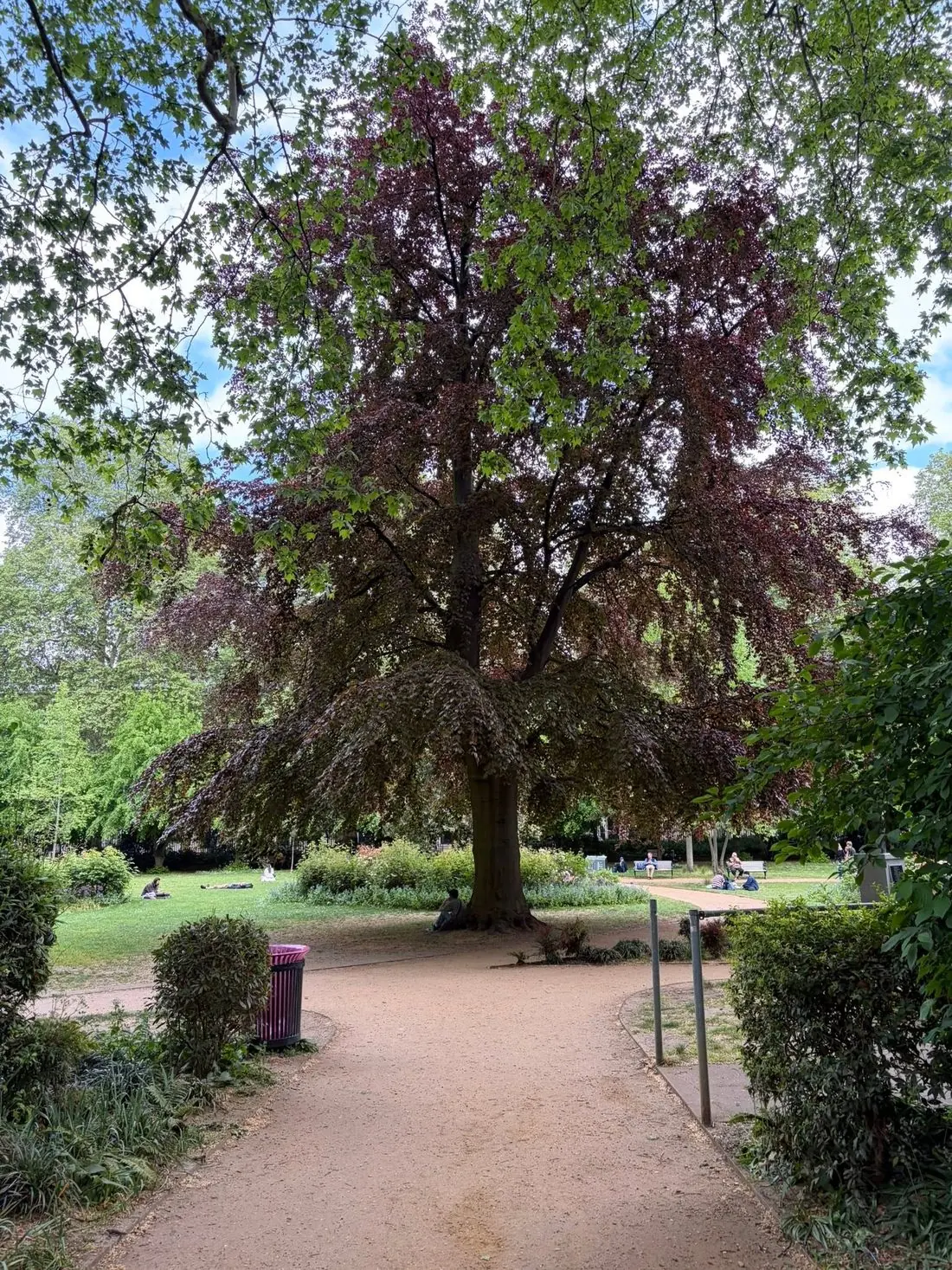
Fast-growing types of trees capture carbon quickly in their early decades, which matters when time is short.
- Alder: the wet-ground specialist. It fixes nitrogen, improves poor soils and thrives where most trees drown.
- Willow: exceptional early growth on damp ground and a lifeline for early-season pollinators.
- Silver birch: a pioneer that establishes on almost anything, light-canopied, so grass and wildflowers keep growing beneath it.
The best types of trees for smaller gardens
You do not need a field to plant for the climate. These smaller species suit gardens and still deliver decades of carbon storage, shade and wildlife value.
- Rowan: compact, hardy and generous, with spring flowers and autumn berries that birds strip within weeks.
- Hawthorn: dense, thorny shelter for nesting birds, blossom for pollinators and a modest final size.
- Field maple: a tidy native maple with brilliant autumn colour, comfortable in hedges or as a standalone garden tree.
How much carbon does a tree actually store?
A useful rule of thumb: a mature broadleaf tree can lock up around a tonne of carbon dioxide over its first hundred years, and a healthy woodland stores far more again in its soil. But averages hide the point. A vigorous oak on deep soil will store many times more than the same oak crammed into a dry verge, and a tree that dies at year fifteen returns most of its carbon to the atmosphere.
That is why the climate case for trees is really a case for establishment. Ten well-chosen, well-planted trees that all reach maturity will outperform a hundred whips planted into rough grass and forgotten. If you are planting at any scale, plan the aftercare, watering, mulching, weed control and formative pruning, with the same seriousness as the planting itself.
Species diversity matters too. A mix of the types of trees above spreads risk against pests and diseases, extends the flowering season for pollinators and builds a more resilient canopy than any single species can.
Right tree, right place, properly planted
The species list is only half the job. A tree planted in the wrong place, or planted badly, will underperform for its whole life or fail entirely, and a failed tree helps nobody. Soil type, drainage, exposure, available rooting space and the distance to buildings all decide what will actually thrive on your ground.
Ground preparation, correct planting depth, mulching and aftercare in the first three years make the difference between a whip that establishes and one that sits still. Our tree planting service covers all of it: species selection matched to your site, planting to recognised arboricultural best practice, and establishment care.
And if you are planting because a planning condition requires it, start with the paperwork: a BS 5837 tree survey early in a project often reduces how much replacement planting is required in the first place (see BS 5837:2012 explained for how that works). Not sure where to begin? Send us the site details and we will point you in the right direction.